








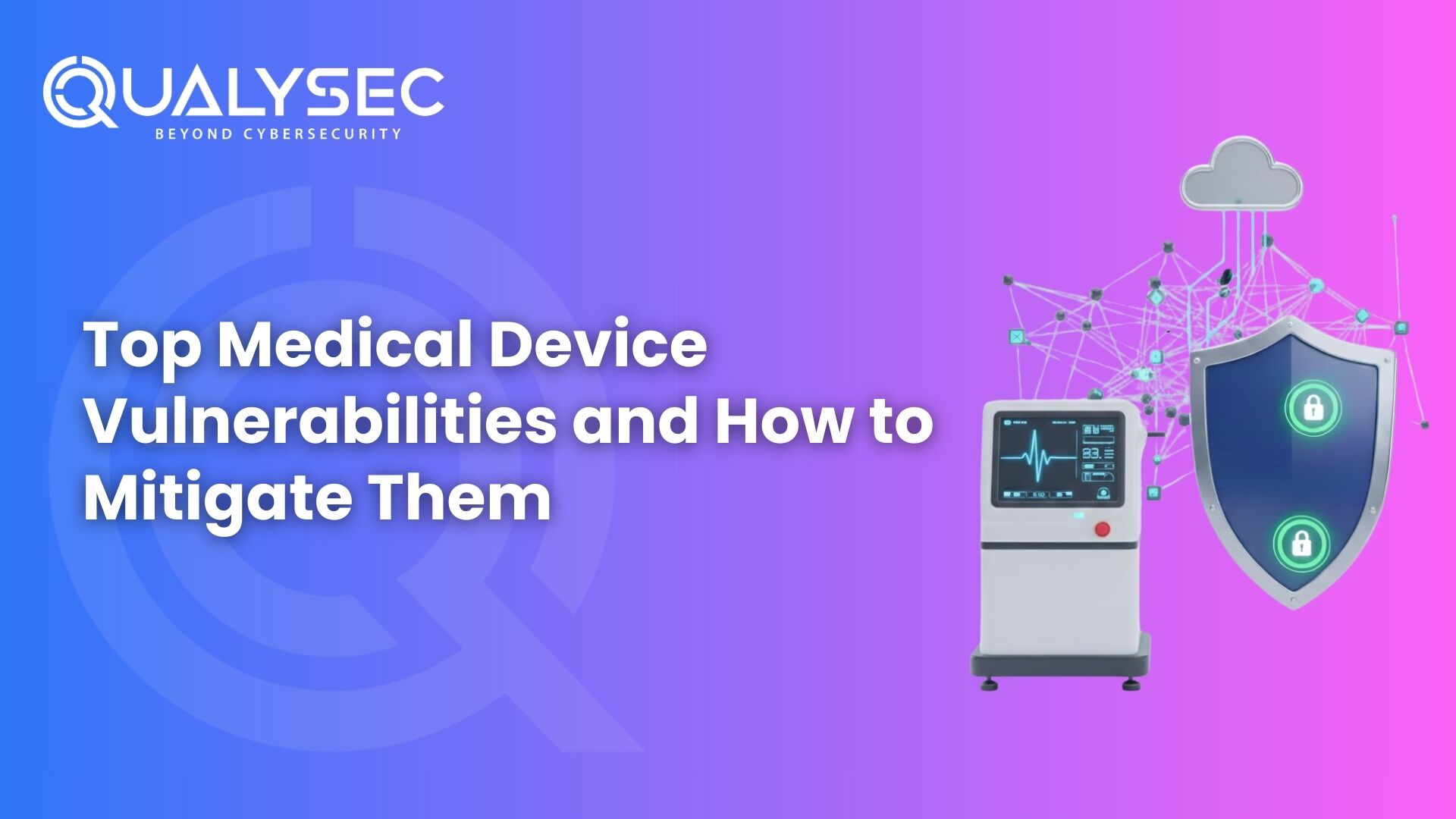
Medical device vulnerabilities are among the most significant issues that threaten healthcare organisations worldwide. Such security vulnerabilities pose a risk to patient safety and the privacy of data. Besides, they subject hospitals to crippling cyberattacks. With the increasing number of connected medical devices, the risk landscape is also growing exponentially. Thus, medical device security is critical to the healthcare provider in every country, and its comprehension is vital.
The country is currently witnessing growing medical device cybersecurity issues in 2026. The healthcare data breaches have become increasingly frequent in recent years. Moreover, medical systems that are critical are targeted by ransomware groups. Such attacks cost organisations such as Ascension and Change Healthcare in the tune of billions of dollars. Besides, the old systems are still susceptible to exploitation. As a result, the issue of medical device cybersecurity needs to be addressed as soon as manufacturers and healthcare providers take action.
This broad-based manual investigates the best medical device security vulnerabilities in the healthcare systems of the world. We look at the way attackers take advantage of these weaknesses. Moreover, we give practical mitigation measures. We also talk about the best medical device vulnerability management. Lastly, we discuss the role of cybersecurity in medical device protection in the safety of patients and organisational integrity.
What Are the Most Critical Medical Device Vulnerabilities in 2026?
Understanding the Severity of Medical Device Security Threats
Medical device vulnerabilities in 2026 have been of a critical severity, never before recorded. Such security vulnerabilities impact gadgets as far as insulin pumps are concerned, to imaging systems. Also, the Internet of Medical Things (IoMT) devices are subject to an ever-growing number of attacks. Hence, there is increasing pressure on healthcare organisations to enhance their posture on medical device safety.
The latest scientific study on healthcare cybersecurity indicates that 74 per cent of the total healthcare data breaches are due to hacking and IT incidents. In addition, such attacks are based on inherent medical device cybersecurity vulnerabilities. To this end, the safety of patients is subject to direct danger in case of a critical device compromise.
Cybercriminals are interested in the monetary worth of patient health information. Moreover, the electronic health records in healthcare organisations are targets. Moreover, IT departments which are understaffed have difficulties in ensuring a strong medical device cybersecurity defence. Thus, the weak points can be found in various types of devices.
7 Most Dangerous Medical Device Security Weaknesses
Here are seven key types of vulnerable medical device categories that have an impact on organisations around the world:
1. Malware Infections Requiring Device Quarantine
In healthcare organisations, malware is present in 51 per cent. These infections impose urgent isolation of devices. Also, radiology systems and imaging equipment are the targets of malware. In addition, malware is used to clean the firmware or destroy system files by the intruders. As a result, complete treatment procedures are delayed as important equipment is put under quarantine.
2. Network Intrusions Targeting Device Networks
The problem of network intrusions affects 44 per cent of organisations. Hackers use poorly segmented networks to access the networks illegally. Moreover, they steal systems using default passwords. Intruders also install backdoors to access the system at a later date. Consequently, security vulnerabilities of medical devices are not limited to a single device.
3. Ransomware Disrupting Critical Device Operations
Ransomware in healthcare organisations is 37 per cent. These campaigns are focused on the availability of devices as opposed to mere data. Furthermore, the attackers know that disrupting devices would put an immediate strain. Moreover, there are ransomware lockers that take MRI and CT machines offline. As a result, the diagnostic possibilities are stalled until the needs are fulfilled.
4. Remote Access Exploitation by Attackers
One out of every 28 organisations is vulnerable to remote access. Hackers use remote desktop sessions which have not been secured. Also, poor VPN implementation offers attack vectors. Moreover, the accounts of vendors that have too many privileges are targeted. Thus, further medical device security protocols are needed for remote maintenance tools.
5. Supply Chain Compromises Affecting Multiple Systems
The prevalence of supply chain attacks among healthcare institutions is 26 per cent. The malicious code is injected into the software updates or firmware. Moreover, secure vendor disseminations disseminate hacked updates. Moreover, there are thousands of devices in various systems whose vulnerabilities are inherited at the same time. Therefore, medical device cybersecurity risk has a rapidly growing supply chain.
6. Vendor-Identified Vulnerabilities Requiring Urgent Updates
Organisations are impacted 24% by the vendor-disclosed vulnerabilities. Nevertheless, repairing medical equipment is a special problem. Moreover, equipment needs offline testing and verification. Also, controlled settings can initiate re-certification. Thus, there are still exploitable windows even when they are fixed.
7. Data Exfiltration from Connected Devices
Healthcare organisations are impacted by data theft (23 per cent). Broken devices spill confidential details of patients. Moreover, hackers attack images and diagnostic data. Moreover, medical records have superior prices compared to financial information in underground markets. Consequently, the issue of medical device security should encompass data protection on a broad level.
Which Medical Devices Face the Highest Risk?
Hackers are targeting the infrastructure of patient care. Based on the industry analysis, the most exposed to the medical device vulnerability are the following devices:
- Imaging Systems (41%) – CT scanners, MRI machines, and X-ray equipment
- Patient Monitoring Devices (40%) – ICU and emergency care systems
- Laboratory Equipment (34%) – Diagnostic and testing devices
- Infusion Pumps (23%) – Medication delivery systems
- Networked Surgical Equipment (19%) – Operating room technologies
- Implantable Devices (19%) – Pacemakers and insulin pumps
These statistics demonstrate that medical device cybersecurity needs to focus on equipment that is patient-critical. Furthermore, the perpetrators know what systems are going to cause the greatest interruption. Thus, healthcare institutions require specific medical device vulnerability management plans.
The Impact on Healthcare Delivery and Patient Safety
Cybersecurity weaknesses of medical devices directly impact patient outcomes. Diagnoses are delayed when the imaging systems go offline. Besides, infusion pumps that are compromised may give wrong medication dosages. Moreover, ransom attacks compel the emergency departments to transfer patients to different hospitals.
These are real-world effects based on high-profile events. The 2024 ransomware attack on Ascension interfered with services in several states. Besides, millions of patient data were exposed due to the Change Healthcare breach. Thus, the loss of security of medical devices can have a domino-like impact on healthcare systems.
| Vulnerability Type | Organizations Affected | Primary Impact |
| Malware Infections | 51% | Device quarantine and service disruption |
| Network Intrusions | 44% | Unauthorized access and control |
| Ransomware Attacks | 37% | Complete operational shutdown |
| Remote Access Exploitation | 28% | Persistent attacker presence |
| Supply Chain Compromises | 26% | Widespread vulnerability inheritance |
| Vendor Vulnerabilities | 24% | Delayed patching and exposure |
| Data Exfiltration | 23% | Privacy breaches and compliance violations |
How Do Weak Default Settings and Authentication Create Security Gaps?
The Danger of Insecure Default Configurations
One of the basic vulnerabilities of medical devices is insecure default settings. Manufacturers usually provide devices that have open ports in the network. Moreover, remote access is on by default. Moreover, low security settings expose the devices as soon as they are deployed.
According to IoT security experts, there is a vulnerability for attackers who use such defaults to achieve unauthorised access. In addition, criminals are able to interfere with the operations of devices remotely. Further, the compromised machines tend to be recruited into big botnets. Thus, the concept of medical device security commences with secure-by-default.
Healthcare organisations are experiencing an issue in dealing with these weaknesses. Most IT departments do not have the ability to see all the devices that are connected. Moreover, the clinical staff can be unaware of security implications. In addition, the vendors are also not cooperative with security hardening, which makes deployment difficult. As a result, there are cybersecurity weaknesses in medical devices in healthcare systems.
Weak Credentials and Hardcoded Passwords
Password security is another medical device security vulnerability. Numerous devices are configured to default to very popular passwords. Moreover, some manufacturers include hard-coded passwords in firmware. Also, users are not able to modify these credentials. Thus, these passwords are readily obtained by attackers either by reverse engineering or by online databases.
Poor authentication has more implications than first access. Attackers who have compromised one system can pivot to other systems. In addition, they allow them to take advantage of inter-device trust relationships. Also, horizontal movement between networks becomes insignificant. As a result, one hacked device poses a risk to the whole healthcare system.
Best Practices for Strengthening Device Authentication
To manage the risk of medical device vulnerability, organisations need to have in place a strong authentication control:
Immediate Actions:
- Force password changes upon first device activation
- Implement strong password policies requiring complexity
- Deploy two-factor authentication where technically feasible
- Use certificate-based authentication for device-to-device communication
Long-Term Strategies:
- Develop dynamic authentication methods beyond static passwords
- Implement biometric authentication for high-security devices
- Deploy identity and access management systems specifically for medical devices
- Conduct regular audits of authentication mechanisms
These control measures minimise the medical device cybersecurity exposure. In addition, they develop defence-in-depth strategies. Also, stratified authentication renders exploitation significantly more difficult. Thus, in their medical device vulnerability management program, healthcare organisations should focus on the issue of authentication enhancements.
Addressing Configuration Management Challenges
Several security vulnerabilities of medical devices are prevented by proper configuration management. Firms ought to have device inventories with security baselines. In addition, automated configuration detection is used to detect unauthorised changes. Also, network access control systems provide policy compliance.
Security research promotes the standard of secure configuration. Healthcare organisations are expected to formulate security profiles for each device type. Additionally, they need to apply configuration validation before deployment. Thus, medical device cybersecurity needs a rigorous practice of configuration management.
Why Are Update Mechanisms and Legacy Components Critical Vulnerabilities?
The Challenge of Medical Device Software Updates
Medical device vulnerability management is subject to special update difficulties. Medical devices cannot be easily updated as opposed to traditional IT systems. Moreover, updates take a lot of testing and verification. Also, the re-certification following major changes may be necessary according to the regulatory requirements. Thus, the vulnerabilities usually last long.
Healthcare security experts state that most devices use old-fashioned software for months or years. In addition, the manufacturers might not focus on updates to older models. Besides, the users are usually ignorant of the security patches. Therefore, familiar medical device cybersecurity weaknesses are still open to exploitation in the healthcare system.
The legacy devices make the situation more complicated. A lot of health organisations have older equipment that was purchased several years ago. Moreover, the vendors might stop supporting these systems. Moreover, upgrading of old devices is an expensive process. Consequently, medical equipment security programs should also consider modern and old equipment.
Insecure Update Mechanisms Enable Attacks
In case update processes are not secured, they themselves are attack vectors. The update files are unencrypted and can be injected. Moreover, without signature checks, unauthorised firmware is installed. Moreover, weakened update servers may deploy harmful software to massive systems of devices.
The Research on IoT vulnerabilities shows that attackers use ineffective update systems. They bring malware in the form of corrupted updates. Furthermore, they alter the firmware to develop permanent backdoors. Thus, the cybersecurity of medical devices should ensure the safety of the full update cycle.
Risks from Outdated and Insecure Components
Components that are insecure are the root cause of medical device security vulnerabilities. The off-the-shelf software libraries and hardware modules are used by manufacturers. Moreover, such components could have vulnerabilities that are well-known. Also, the vendors of the components can cease supporting the security. As a result, gadgets are vulnerable because the parts used are vulnerable.
There are new risks in the medical device supply chain. To the final assembly, components are going through several parties. Moreover, there are chances of tampering during every handoff. Besides, imitated parts can be introduced to the supply chain. Thus, medical device vulnerability management should deal with component security along the supply chain.
Creating Secure Update Processes
Secure update mechanisms should be implemented in healthcare organisations:
- Encrypt all update files during transmission and storage
- Implement digital signature verification for update authenticity
- Use secure boot processes to validate firmware integrity
- Deploy automated update systems with minimal user interaction
Process Improvements:
- Establish regular update schedules for all devices
- Test updates in controlled environments before production deployment
- Maintain rollback capabilities for problematic updates
- Document update procedures for clinical and IT staff
The practices improve the medical device security during the lifecycle of the devices. In addition, they minimise the vulnerability exposure period. Also, smoothed-out processes promote prompt patching. Thus, companies will be able to enforce better cybersecurity for medical devices.
Addressing Legacy Device Challenges
Medical device vulnerability management programs have special consideration for legacy devices. Companies ought to carry out intensive inventories of legacy devices. Moreover, they ought to evaluate the risks of the unsupported equipment. Also, they are supposed to introduce compensating controls in case direct patching is not possible.
The network segmentation offers paramount security for the outdated devices. Seclusion of vulnerable equipment will restrict the spread of attacks. Besides, increased surveillance identifies deviant conduct. There are also access control measures that avoid unauthorised interaction. Thus, layered defences offset the natural medical device security weaknesses.
How Can Organisations Implement Comprehensive Medical Device Security?
Building a Security-by-Design Culture
Security-by-design is important in terms of achieving effective medical device cybersecurity. The security considerations should be incorporated at all lifecycle stages. Moreover, the design should be based on security requirements. Also, frequent security tests are to be carried out to detect any vulnerabilities.
Security frameworks focus on proactive and not reactive security models. Threat modelling is to be done by manufacturers in the development of the product. They are also supposed to do testing of penetration prior to market launch. They are also supposed to be security-conscious by carrying out post-market surveillance. Thus, medical device security is made part of organisational DNA.
Healthcare organisations also have to think security-first. During procurement, they must consider security capabilities. They should also insist on the vendors proving the ability to stay secure. Also, they ought to include security metrics in the performance assessment of the vendors. Therefore, the market forces lead to better medical device cybersecurity.
Implementing Network Security Controls
Network security will be a necessary safeguard against the exploitation of medical device vulnerabilities. Healthcare organisations are supposed to implement a defence-in-depth network structure. Moreover, they ought to separate medical device networks from general IT systems. Also, they are expected to put stringent measures in access controls among network zones.
Critical Network Security Measures:
- Deploy next-generation firewalls with deep packet inspection
- Implement intrusion detection and prevention systems
- Use virtual local area networks (VLANs) for device isolation
- Deploy network access control to enforce device policies
- Monitor network traffic for anomalous patterns
- Implement secure remote access with multi-factor authentication
These controls are the ones that go a long way in minimising the exposure of medical devices’ security vulnerabilities. In addition, breaches exist in network segmentation in case they do. Further, monitoring allows quick detection and response to incidents. Thus, medical device cybersecurity is based on network security.
Establishing Medical Device Vulnerability Management Programs
There are formal medical device vulnerability management programs which organize security activities within organisations. All the related medical devices should be detected by these programs. Moreover, they are to determine vulnerabilities and make them a priority in terms of remediation. Moreover, they must monitor security enhancements in the long run.
Healthcare security best practices are the best practices of healthcare security:
Program Components:
- Asset Inventory: Maintain complete device inventories with security attributes
- Vulnerability Assessment: Regularly scan for known vulnerabilities and misconfigurations
- Risk Prioritisation: Rank vulnerabilities by potential patient safety and operational impact
- Remediation Planning: Develop coordinated patching and mitigation strategies
- Validation Testing: Verify that security improvements don’t disrupt clinical functionality
- Continuous Monitoring: Track security posture and emerging threats
These program components cover the medical device cybersecurity vulnerabilities systematically. In addition, they guarantee a steady security enhancement. Thus, there is a quantifiable risk reduction in the long run in organisations.
Securing Data Protection and Privacy
One of the key elements of medical device security is data security. The organisations should safeguard the data throughout its lifecycle. In addition, they are expected to encrypt data when passing it over networks. They must also ensure that they have data storage in devices and backend systems.
The issue of privacy preservation involves the use of the principles of data minimisation. Only the required information should be collected by devices. Furthermore, the retention periods are to be based on the regulatory requirements and business needs. As well, organisations are supposed to offer clear privacy policies. Thus, medical device cybersecurity is that which involves security and privacy.
Training and Awareness Programs
The role of the human factor in the success of the vulnerability management of medical devices cannot be underestimated. Security awareness training is required for the healthcare staff. In addition, they are expected to know how they can defend devices. Besides, they ought to be aware of how to communicate suspicious behaviour.
Training programs should cover:
- Password security and authentication best practices
- Recognising phishing attempts targeting medical device access
- Proper device configuration and management
- Incident reporting procedures
- Physical security considerations for portable devices
Such programs develop security-conscious cultures. In addition, they eliminate human error risks. As such, training is an addition to technical medical device cybersecurity controls.
Why Is Qualysec the Leading Partner for Medical Device Security in the USA?
Healthcare organisations require a reliable cybersecurity partner when they go through the complicated task of securing medical equipment against evolving threats. Qualysec would be the best company to offer the most effective solutions to medical device vulnerability management to organisations in the United States and worldwide.
What Makes Qualysec Different?
Qualysec has specialised skills in healthcare cybersecurity and medical device security. The firm is aware of the specific regulatory environment of medical equipment. In addition, the team at Qualysec is very familiar with FDA cybersecurity requirements. Moreover, they offer viable solutions that strike a balance between security and clinical use.
Comprehensive Services for Medical Device Protection:
Qualysec provides full-cycle cybersecurity to the medical devices, such as:
- Medical Device Penetration Testing: Qualysec provides intensive security testing that emulates real-world attacks. Besides, they test their vulnerabilities in advance before they are utilised by attackers. They also include comprehensive remediation recommendations, which are in line with the expectations of the FDA.
- Vulnerability Assessment Services: The staff conducts extensive scanning of the medical device portfolio. Moreover, they are more concerned with patient safety and operational impact findings. As well, they monitor progress in remediation with a time perspective.
- Security Architecture Review: Qualysec is an assessment of network architectures that offer security to medical devices. In addition, they propose segmentation mechanisms and access control measures. Moreover, they make sure that the architectures facilitate security and clinical processes.
- Compliance Support: Qualysec assists companies in adhering to the FDA cybersecurity provisions. Moreover, they help to comply with the HIPAA medical device data. They are also involved in the preparation and documentation of the audit.
- Incident Response Planning: The company comes up with customised response plans to medical device breaches. Besides, they offer tabletop exercise facilitation. Also, they provide 24 hours of incident response in case of a breach. Additionally, they offer 24/7 incident support when breaches occur.
Why Healthcare Organisations Choose Qualysec:
Proven Track Record: Qualysec has been able to provide medical equipment to hospitals, manufacturers, and health care systems throughout the United States. Their customers report the objective improvement of medical device security posture.
Healthcare Industry Expertise: As opposed to generalist security enterprises, Qualysec focuses on healthcare cybersecurity. They are aware of clinical workflows, regulatory requirements and safety concerns of the patient. Hence, their suggestions can be implemented.
Advanced Testing Methodologies: Qualysec uses the latest technology in detecting cybersecurity vulnerabilities of medical devices. Their group keeps abreast with new attack vectors. In addition, they constantly revise test strategies in terms of threat intelligence.
Regulatory Knowledge: Qualysec has extensive knowledge of postmarket and premarket cybersecurity requirements imposed by the FDA. Besides, they monitor regulatory changes and assist clients in adjusting. Also, they offer evidence records on regulatory submissions.
Client-Focused Approach: Qualysec does not provide reports but instead collaborates with clients. They offer continuous advice and encouragement. Additionally, they program services in response to particular organisational requirements. Also, they make sure that the clients comprehend findings and recommendations.
Location and Accessibility: Qualysec is located in the USA and has a good knowledge of the American healthcare environment; thus, it delivers accessible assistance to the organisations located throughout the country. They have a staff on site to conduct appraisals whenever required. Moreover, they provide distant testing and consultancy services in order to be as flexible as possible.
Take Action Now to Protect Your Medical Devices
Do not wait until your medical equipment has been breached to reveal its security vulnerability. Qualysec has end-to-end solutions that will be custom-designed to meet your needs as an organisation. In their professional team, they are able to evaluate your current security posture, find out key vulnerabilities, and apply effective measures.
Schedule a free consultation with Qualysec today. During this consultation, their security experts will discuss your specific challenges and outline how Qualysec can strengthen your medical device cybersecurity program.
Additionally, download valuable security resources and reports to learn more about protecting your medical devices.
Discover Qualysec’s comprehensive security services and learn why they are the trusted choice for healthcare organisations committed to patient safety and data security.
Conclusion
The issue of medical device vulnerability is one of the most topical problems of healthcare organisations in 2026. These vulnerabilities pose a danger to the safety of patients, jeopardising sensitive information, and making organisations vulnerable to disastrous cyberattacks. More so, the number of connected devices is increasing exponentially, making the attack surface even larger. Consequently, the overall medical device security plans are needed to ensure the safety of the healthcare infrastructure.
Malware infections, network intrusion, ransomware attacks, exploitation of remote access, supply chain vulnerabilities, vulnerabilities of vendors, and data exfiltration are the most critical vulnerabilities that should be addressed quickly. Furthermore, poor default configurations, authentication vulnerabilities, and unsecured updating procedures are the basic pillars of successful medical device cybersecurity. Also, organisations should still adopt defence-in-depth strategies that involve technical controls, process enhancements, and training of staff.
Healthcare organisations are not the ones that can handle these challenges unilaterally. Collaboration with security-focused companies such as Qualysec offers the knowledge and resources required to perform holistic medical device vulnerability management. In addition, manufacturers should adopt security-by-design concepts in the lifecycle of the device. Moreover, the regulators are still tightening their cybersecurity requirements for medical devices.
It could not be any higher in stakes. The security vulnerability of medical devices directly affects patient outcomes and organisational viability. Thus, medical device cybersecurity is a strategic imperative that all healthcare organisations should adopt. The way ahead must be bound to commitment, investment and cross-system collaboration in the healthcare ecosystem.
Take action today to secure your medical devices and protect your patients. Contact Qualysec to begin your security transformation.
Frequently Asked Questions
1. Why are medical devices vulnerable?
The vulnerability of medical devices is dependent on a number of related factors. Their computational ability is also usually limited, which limits security implementations. Moreover, numerous devices have weak default passwords and unprotected network protocols. Moreover, the outdated systems have no current security provisions or updates. Hackers will thus have various points of attack to take advantage of such vulnerabilities.
2. What threats target connected medical devices?
Physical devices that are linked to each other are vulnerable to malware, ransomware, and network attacks. Also, it has attackers who use remote access vulnerabilities and compromises. Moreover, the attempts of data exfiltration aim at patient data. Thus, multivariate medical device cybersecurity coverage can deal with various threat vectors at the same time.
3. How are vulnerabilities identified?
Various methods are used to identify the vulnerability of medical devices, among them are penetration testing and security tests. Moreover, organisations scan device fleets with vulnerability scans regularly. Also, there is threat intelligence, which indicates the patterns of attacks. Thus, active medical device protection initiatives identify vulnerabilities before malicious people use them.
4. Is compliance mandatory?
Yes, cybersecurity compliance in the field of medical devices is obligatory for manufacturers and healthcare organisations. In addition, the FDA rules mandate security measures during the device life cycle. Also, HIPAA requires the security of patient data on medical devices. Thus, there are legal and regulatory requirements associated with the implementation of cybersecurity in medical devices in organisations.
























































































































































































































































0 Comments