








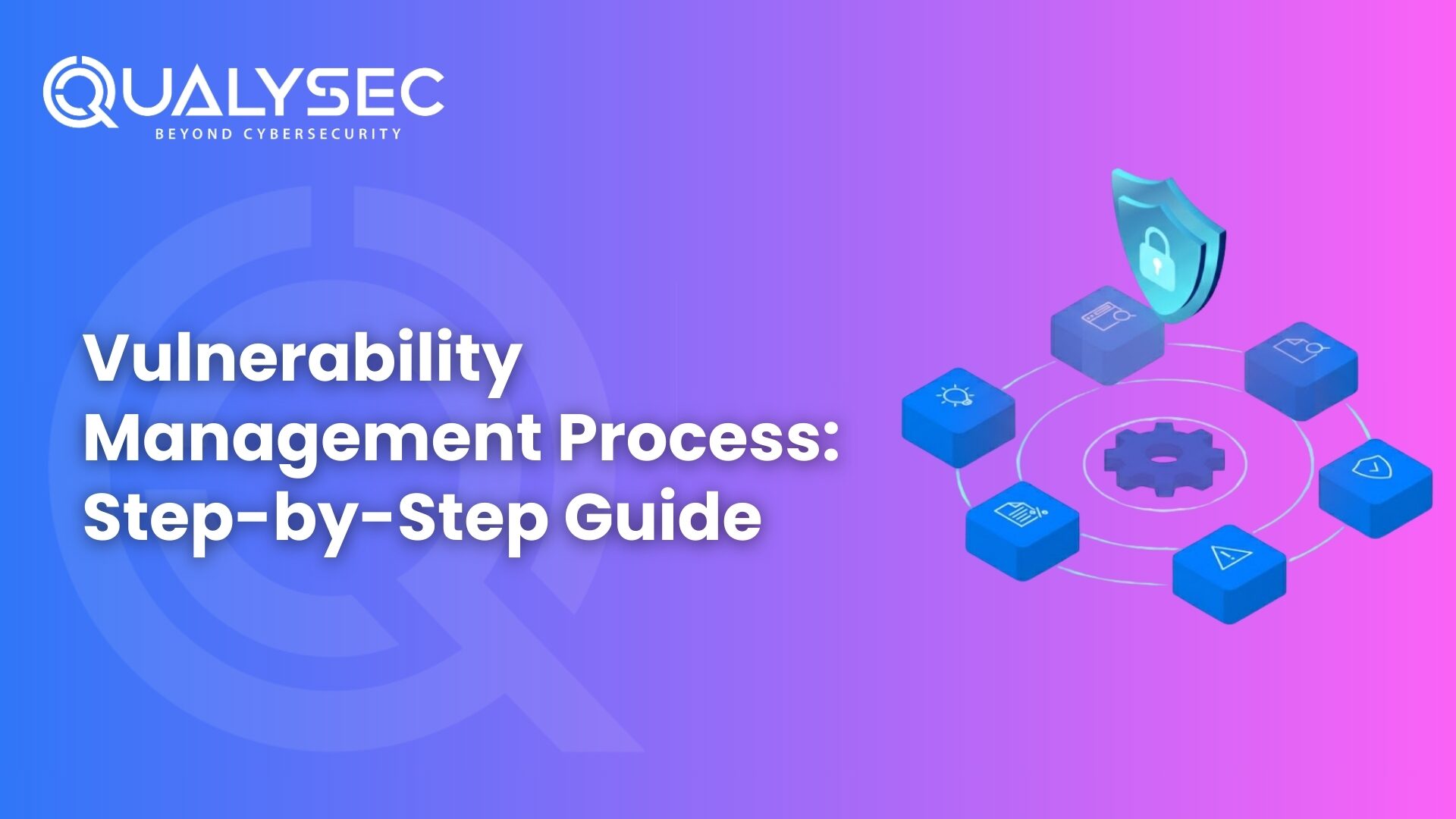
In 2026, cyber threats were high, and there was a 21% increase in new vulnerabilities, projecting 31,000-34,000 vulnerabilities for 2026. Firms possess over 1000 open security holes on average. Serious bugs (CVSS 7.0 and above) projected in 2026 are between 13,500 and 15,000. This creates space for a vulnerability management process for businesses.
Only 22% of companies fix critical bugs within a week, and 43% of companies still have them more than 60 days later, particularly in high-risk systems such as finance. Patchwork overwhelms the security teams. Over 57% report burnout, and 41% percent continue to fix them by hand. Multi-step attacks use medium-level vulnerabilities, so repairing them as soon as possible becomes the need of the hour. Fast patching is possible. Those teams that do not rank by the raw score but rather by the actual effect can complete up to 32% to 41% faster.
Are you prepared to secure your business? Take the first step in vulnerability management today by contacting Qualysec Technologies!
Vulnerability Management Process – Step-by-Step
A basic vulnerability management process used by organisations to identify, prioritise, and eliminate security issues before malicious individuals exploit them involves finding, ranking, and fixing them. Below is a step-by-step cybersecurity vulnerability management direction for security teams with actionable steps in the year 2026, when new threats emerge fast, particularly with AI attacks and cloud systems.
Step 1 – Inventory Management and Comprehensive Asset Discovery
Begin by listing all the computers and devices. Apply automatic devices to offices, clouds, servers, containers, and IoT devices. The vulnerability management tools scan IP addresses and search open ports, and also monitor network traffic in order to detect concealed devices.
The assets receive a distinct ID and such information as the type of hardware, software release, and the owner. Important data, like customer data, payment sites, and SaaS links, should be fixed first. Here, unauthorised applications and concealed cloud accounts also exist and comprise 30-40% of corporate risks.
Good firms maintain their list at approximately 98% by verifying it daily. They synchronise their data with the help of tools such as ServiceNow or Jira. The assets have been divided into three categories –
- Tier 1 (High Value) – Pay-money systems, scan on a 24-hour basis.
- Tier 2 (Medium Value) – In-house tools, scan after every 72 hours.
- Tier 3 (Low Value) – Test environments, scan once a week.
Lightweight, computer-based sensors run continuously, while cloud services automatically log virtual machines and serverless functions. Teams also track application dependencies – such as a web app that relies on a questionable API—so they catch every risk area early. This list of vulnerability management processes allows the teams to concentrate on actual attack surfaces rather than perceived ones.
Explore our latest guide on Understanding the Importance of VAPT for Cybersecurity.
Step 2 – Intensive Detection and Scanning of Vulnerability
Next in the cyber security vulnerability management, teams then scan the assets they have listed with and without login credentials. Some tools, such as Qualysec vulnerability Scanner, Tenable Nessus, Qualys VMDR or Rapid7 InsightVM, request data in large, publicly available databases and vendor feeds in real-time.
Active scans are like a hacker – port scanners seek open ports, web scanners seek typical web issues, and code reviewers seek the actual code. Teams run scans on public systems continuously and scan internal systems weekly to balance thoroughness with system performance.
Passive scans scan the logs of firewalls, proxies and endpoint software. They notice unorthodox activity, including software that is linking in the background. Custom scripts try random values to uncover hidden vulnerabilities, while API tests flag specific injection or authorisation issues. A shared dashboard displays results with CVSS v4 severity ratings, and teams quickly filter out noise.
- Hits of High Confidence – Known exploits with proof of concept
- Configuration Problems – Open RDP ports or default passwords
- New Threats – Weaknesses associated with recent attacks
In well-tuned systems, 92% issues are detected in 48 hours after a new bug is reported. This step helps to bring in a new overload of intel, and it is necessary to rank them carefully before the next step.
Step 3 – Intelligent Prioritisation and Risk Assessment
Analysts do not focus on raw scores. They include the probability of an attacker exploiting the bug (EPSS) and business impact, such as a medium bug on the laptop of a CEO would be much more serious. They use a simple formula –
Risk = Impact x Effectiveness x Asset Value
Teams use MITRE data and CISA cyber-threat intelligence to link bugs to real-world attacks. Machine learning tools also predict risks based on system behaviour. There are definite levels of priority –
- P0 (Immediate) – In use, repair within 24-72 hours
- P1 (Urgent) – Evidence, remedy over 7 days
- P2 (High) – It will probably be targeted soon, and it will be fixed within 30 days
- P3 (Medium/Low) – Watch regularly
Teams recheck 20% of bugs. Dashboards display attack paths, and tools map bugs to recent attacks. This approach helps teams resolve the highest-impact issues quickly, even when thousands of new bugs appear each year.
Step 4 – Remediation and Targeted Patching
Fix teams are fast and precise in their actions. Patch management tools, such as Ivanti, Automox, or WSUS, install updates onto Windows, Linux, and macOS computers. The patches are initially tested on a sandbox that resembles production to identify side effects. Automation rules dominate –
- Autodeploy – These patches with low-level risk are applied during maintenance.
- Virtual Patching – Attacks on old systems, which cannot be patched, are blocked by Firewall rules.
- Code Fixes – The developers correct the bugs of the apps through GIT pull requests, which initiate continuous integration pipelines.
Teams use playbooks to make configuration changes, such as disabling risky web server modules or tightening Kubernetes permissions. When a patch is not yet available, they apply temporary workarounds—for example, turning off SMBv1 until the full patch is ready.
The coordination between teams involves functions. Security tickets set the direction of developers, IT schedules the downtime, and change managers implement schedules. High-priority fixes trigger executive alerts. Automation tools like Puppet or Chef schedule patches across all environments and handle dependencies, such as patching Apache before NGINX.
Teams verify systems before and after each fix and achieve an 85% success rate. The system audits every action and supports compliance with standards like NIST 800-53 or CMMC. The step minimises the vulnerability time of the system.
Step 5 – Intense Checking, Reporting, and Constant Enhancement
Lastly, the scans are once more done on the fixed assets by teams to ascertain that the problem has been removed. Their goal is that the highest priority bugs will close at a rate of 95%. Monitoring tools that can be shown continuously detect when there is a patch failure because of user overrides. Key measures that are presented in reporting dashboards include –
- Coverage Percentage – What percentage of assets do you scan every week?
- Backlog Trends – Bugs with conversion time longer than 90 days
- Efficiency Gains – MTTR is reduced by 20% every quarter
Teams conduct root-cause analysis on misses. For example, “vendor patch delayed 14 days.” Lessons feed policy updates, like mandating vendor SLAs. Executive summaries highlight ROI – “$X saved by averting ransomware.”
Feedback loops restart the cycle – new assets trigger scans, and threat and vulnerability management refreshes priorities. Maturity models like CVSS or FAIR quantify progress from ad-hoc to optimised. Quarterly tabletop exercises test the full vulnerability management in cybersecurity against simulated breaches.
Get a Vulnerability & Pen Testing Report
How Qualysec Technologies Can Help You
By 2026, the companies using our process will be able to address vulnerabilities and minimise breach risks. We give precedence to fixes on the ground, automation, and monitor the MTTR. This preventive manner eliminates alert buzz and historical issues. Leaders who introduce complex tools to the vulnerability management life cycle create sustainable security.
Qualysec enables American firms to operate perfect business operations. Our proven vulnerability management process goes step by step with our professionals using tested methods that are more difficult to crack. The teams experience 45x faster MTTR and tripled threat detections.
Asset Discovery Mastery
Engineers map all the devices with hybrid scanners. They match the list of your data in real time, which comes under IT vulnerability management. This provides complete visibility pre-scanning.
Detection Precision
Scanners are able to identify CVEs immediately. Testing is performed with an AI + Human approach to test exploits at a low false positivity rate of less than 2%. This provides you with the true picture on the first day.
Prioritizing Excellence
AI combines EPSS, CVSS v4, and the business environment. Top priority risks are verified by human specialists. Further, teams address the most significant threats first.
Remediation Acceleration
Specialists subject patches to mirrored environments. Virtual patching secures the old systems in real time. Clients seal 95% of issues with authority.
Verification Rigor
Fixed every week, a verification is done every week of the month. Blockchain audits provide audit-ready compliance.
Tool Intervention
Qualysec establishes scanners and coordinators. Everything is connected with seamless APIs to monitor for threat and vulnerability management.
Training and Optimisation
There are specific workshops on the best practices of the vulnerability management life cycle, which are taught to teams. Automation roadmap reduced burnout by 50% among clients.
Continuous Follow-up
24/7 U.S. professionals follow up. The rates of SLA hits and backlog are monitored monthly.
No one matches Qualysec’s testing depth. Our OSCP-certified experts bring years of hands-on experience. Finance and healthcare clients report no major breaches after adopting our cybersecurity services. Upgrade your approach – partner with Qualysec for resilient, audit-ready compliance.
Ready to get started? Register your consultation at Qualysec Technologies now!
See Why Companies Worldwide Trust Us

Conclusion
When you neglect the vulnerability management process, it endangers your company. The number of attack surfaces increases with the hybrid cloud and AI apps. The teams should identify, analyse, prioritise, correct, and systematically recheck all weaknesses. This is the transition from fighting fires to preventing them. By going to the location of the greatest threats, companies that do it best reduce the risks of breach.
There is a need to have continuous vulnerability checks. Zero-day and supply-chain attacks are not detected in the scans of the static. A dynamic approach can change with the emergence of new threats, and thus makes you robust.
Control your cyber security – Get in touch with Qualysec Technologies and start a worry-free digital journey today!
Speak directly with Qualysec’s certified professionals to identify vulnerabilities before attackers do.

FAQs
1. What are the main phases of vulnerability management?
The vulnerability management process is in five steps, which include asset discovery, identifying everything, detection scanners identify CVEs, assessment categorises risks, remediation implements corrections, and verification ensures shutdowns. The process repeats to have effective security.
2. How do organizations measure process effectiveness?
Companies track success by fixing major bugs within seven days, maintaining 98% patch coverage, keeping the backlog under 100, and meeting a 95% SLA. Dashboards show monthly trends, while peer comparisons highlight measurable gains.
3. Who is responsible for vulnerability management?
Security teams own the process. They patch code defects, run IT vulnerability management programs, and work with executives who set budgets. Cross-functional groups resolve priorities together, strengthening security throughout the entire cycle.
4. What challenges affect vulnerability remediation?
Fifty-seven per cent of patches are blocked by legacy systems, and vendors drag the process on. False positives of 25% overpower alert fatigue. The firms respond by prioritising, automating through vulnerability management tools, and outsourcing in an effort to manage efficiently.
Secure your defences – connect with Qualysec Technologies and empower your vulnerability management process now!







































































































































0 Comments